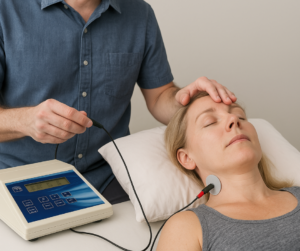
Frequency Specific Microcurrent (FSM): Why Isn’t This Powerful Therapy Used More?

Dr. Mike Norman
A Missed Opportunity in Modern Healthcare
If you’ve found your way to learning about Frequency Specific Microcurrent (FSM), you have likely been on a long and frustrating journey with chronic pain. You have probably “tried everything else” and are searching for a solution that offers more than just temporary relief. When patients experience the profound benefits of FSM therapy, a fair question almost always follows: “If this works so well, why isn’t it used everywhere? Why haven’t I heard of it before?”
The answer has very little to do with whether FSM is an effective alternative pain treatment and almost everything to do with the structure of modern healthcare. The reasons FSM remains a hidden gem are a powerful illustration of the limitations of our current system.
1. FSM Doesn’t Fit the Pharmaceutical Model
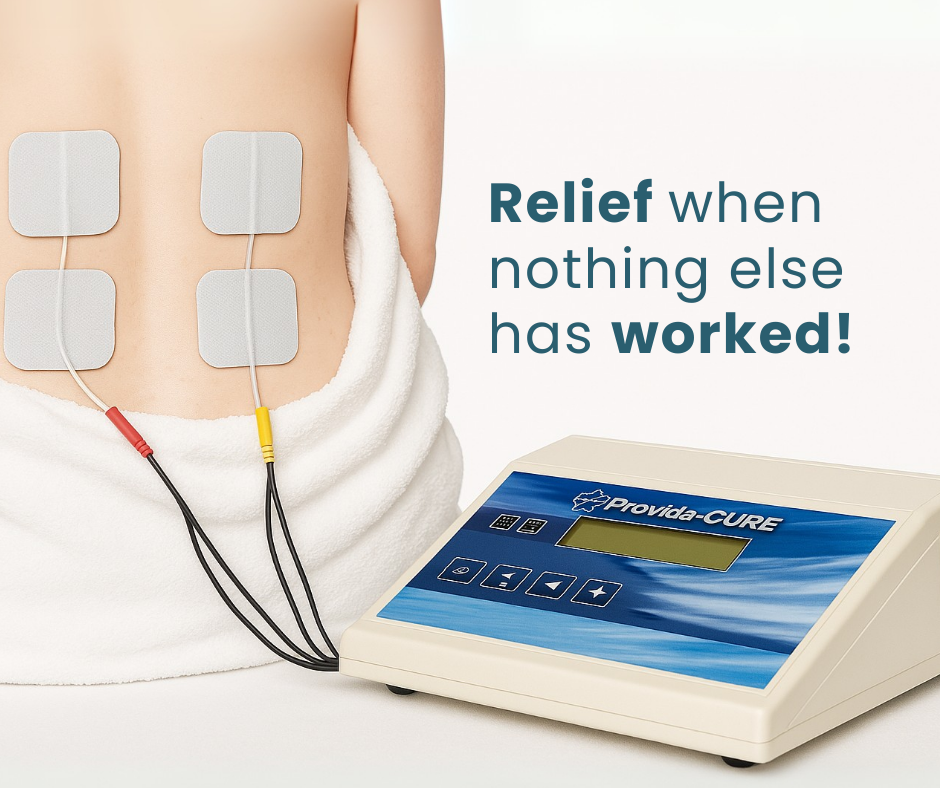
Modern healthcare is largely built around patentable, high-profit solutions. Drugs can be patented. Surgical devices can be patented. Procedures tied to expensive equipment can be billed at a massive scale. FSM, however, doesn’t fit this lucrative model. It uses an extremely low-level electrical current (microamps) and specific frequencies to restore function at a cellular level. There is no billion-dollar drug attached to it, no lifelong prescription, and no high-cost disposable component. This makes it fundamentally unattractive to a system that prioritizes profit.
2. FSM Requires Time, Skill, and Clinical Thinking
FSM therapy is not a “plug-and-play” modality that can be delegated to an assistant. It is both an art and a science that requires a deep understanding of anatomy, physiology, and the interconnectedness of the human body. An effective FSM practitioner must:
- Think critically to identify the root cause of a patient’s condition.
- Recognize patterns across multiple body systems.
- Adjust treatment in real-time based on how the patient’s tissues are responding.
In a healthcare system optimized for 15-minute appointments, FSM feels slow. It cannot be rushed, automated, or easily scaled. This makes it a poor fit for a high-volume, protocol-driven environment, even if the results are superior.
|
FSM Approach
|
Conventional Approach
|
|---|---|
|
Goal: Restore function, heal tissue
|
Goal: Suppress symptoms, manage pain
|
|
Method: Gentle, bio-compatible microcurrent
|
Method: Drugs, injections, surgery
|
|
Time: Requires 60-90 minute sessions
|
Time: Optimized for short, billable appointments
|
|
Focus: Root cause resolution
|
Focus: Symptom management
|
3. FSM Challenges the “Diagnosis-to-Drug” Loop
Conventional medicine often operates on a linear path: a diagnosis leads to a prescription drug, which often leads to long-term dependency. FSM is based on a different premise entirely: that pain and dysfunction persist because communication within the body has been disrupted. It doesn’t aim to override the body with powerful chemicals; it aims to restore the body’s own innate ability to heal by providing the correct resonant frequencies to damaged tissues.
This approach threatens a system that is often built on long-term symptom management. An empowered patient who is no longer in chronic pain is also a patient who no longer needs endless prescriptions and procedures.
4. Gentle Therapies are Often Misunderstood
We live in a culture that believes that for a treatment to be powerful, it must be intense. We expect to “feel” it working. Microcurrent therapy is so gentle and subtle that many patients don’t feel anything at all during a session. It is not designed to numb pain or force a muscle to relax. It works quietly at the cellular level to reduce inflammation, increase energy (ATP) production, and encourage tissue repair.
The irony is that for patients with highly sensitized nervous systems, like those with fibromyalgia or neuropathy, aggressive treatments often make them worse. Their overwhelmed systems respond far better to a gentle, calming therapy like FSM. The results are not always immediate, but they are often lasting.
Why We Choose to Use FSM at Modern Chiropractic
We use Frequency Specific Microcurrent because our commitment is to our patients’ results, not to a particular model of care. We believe that people who have been told “nothing else can be done” deserve another option. We have seen firsthand that restoring communication in the body often works better than trying to silence it with drugs.
FSM may not be mainstream, but that doesn’t mean it’s fringe. Many of today’s most respected therapies were once ignored or sidelined simply because they didn’t fit the dominant model of their time. We choose to invest the time and skill required for FSM because it provides a path to healing for those who had lost hope.
The bottom line is that FSM is used less because it isn’t easily monetized, it doesn’t rely on drugs, it requires deep clinical skill, and it puts the patient’s long-term health first. And for the right person, that can make all the difference.
If you’d like to learn whether Frequency Specific Microcurrent may be the right approach for your chronic pain or fibromyalgia, call Modern Chiropractic today at 502-554-3800 to schedule a consultation. Sometimes the most effective tools are the ones you don’t hear about on television.